


Xena - Group Voice Party
3.9719.00 Reviews
App Specs
- Version
- 2.3.9.3
- Updated On
- License
- Free
- Downloads
- 10,000,000+
- Developer
- Gmancal Studio
- Categories
- Entertainment
- Platform
- Android, iOS
Screenshots



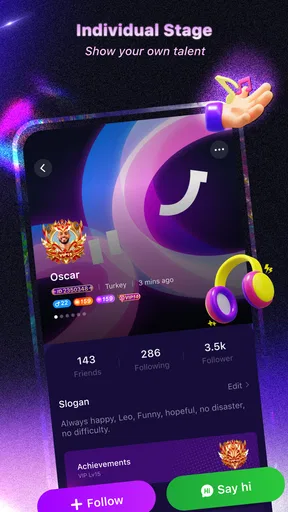


 Analysis by AppCompare
I came away from Xena - Group Voice Party with the impression that its real value appears when people are ready to talk at the same time. This is not an entertainment app I would open for a quiet, one-person session. It is built around social audio, so the quality of the experience depends on the room, the people in it, and the strength of the connection carrying the conversation. When those three things line up, it can feel lively and immediate. When they do not, the app has much less to offer.
That distinction matters before downloading it. Xena is a free entertainment app from Gmancal Studio, aimed at mature users and available for Android devices running version 6.0 or later. It has passed the ten-million-install mark and holds a 3.9 average from roughly sixty-one thousand ratings, which suggests a substantial audience but also a mixed experience rather than universal approval. I would recommend approaching it as a casual group-voice space, not as a replacement for every messaging, streaming, or gaming service on your phone.
How Xena feels when the connection is doing the work
The first thing I noticed is how strongly the app depends on live participation. Text-based social apps can still be useful when someone replies later, but a voice room loses much of its energy if people are cutting out, arriving late, or speaking over one another because the connection is unstable. Xena works best when I treat it as a shared moment rather than a feed to browse passively.
A realistic use case is a small group of friends winding down after work. One person starts a voice session, another joins while commuting, and the conversation shifts between jokes, casual updates, and whatever topic keeps the room moving. In that situation, the app can be more natural than typing because reactions arrive immediately. The appeal is not a complicated toolset; it is the feeling of being present with other people without arranging a formal call.
That same immediacy creates a trade-off. If I join a room where the conversation is already established, I may need time to understand the tone and the relationships between participants. Voice spaces are less forgiving than text threads because context disappears quickly. A message can be reread, while a missed sentence may leave me unsure about what is happening. New users should not judge the whole service after entering one quiet or confusing room.
My most useful habit was to listen briefly before trying to participate. That gives me a chance to understand whether the room is actually welcoming, whether several people are talking at once, and whether the pace suits me. It also avoids the awkwardness of speaking immediately into a conversation that has already moved on. For a social audio app, this small pause makes a noticeable difference.
Connectivity is especially important on mobile data. A strong home connection can make a voice room feel effortless, while a crowded public network may introduce delays or interruptions. I would avoid assuming that a room will remain comfortable simply because other apps are loading normally; audio is more sensitive to timing than a webpage or a static image. If a conversation matters, I would join from a place where the connection is dependable.
Worth Reading Before You Choose

EA SPORTS FC Mobile 26 Is a Bigger Football Game, but It Takes Time

Flipboard Shows What News Apps Must Do Beyond the Feed

Switching to Android Auto Means Rethinking Your Driving Routine

Google Calendar Makes a Crowded Week Easier to Manage

Ludo King Makes the Most of the Minutes Between Plans

Baby Panda World Brings Quick Play to Modern Phones, but Its Game Library Feels Busy
Why mobile use is convenient, and where it becomes awkward
Xena makes the most sense in mobile situations where I have a few spare minutes and want human interaction instead of another silent scroll. It can fit a break, a relaxed evening, or a casual gathering where everyone is already using a phone. The low commitment is part of the attraction: I do not need to prepare a long post or create polished content before taking part.
However, voice participation is not automatically convenient just because it happens on a phone. In a noisy street, on public transport, or in a shared office, I may hear other people poorly and make it difficult for them to hear me. That makes headphones or a quieter location more important than they would be for ordinary text messaging. I would also be careful about joining while doing something that demands concentration, since a live conversation encourages attention even when I intend to listen casually.
One practical workflow is to decide what role I want before opening the app. If I only have a short break, listening is more realistic than trying to become an active participant. If I have time for a proper conversation, I can choose a quieter setting and avoid dropping into a room while distracted. This sounds simple, but it prevents the common disappointment of expecting a social experience while giving it only half of my attention.
The mature rating is another reason to think about context. I would not treat the app as suitable for children, and I would be selective about the rooms or conversations I enter. Adults who are comfortable with open-ended social audio may find that flexibility appealing. Anyone looking for tightly moderated, family-oriented entertainment should choose a different type of service instead.
Compared with ordinary voice calls, the attraction is discovery and the possibility of joining a broader social setting rather than contacting one person directly. Compared with text communities, the benefit is immediacy and tone. Compared with video chat, Xena can feel less demanding because the focus is on voices rather than appearance. The downside is that it may provide less structure and less visual context than those alternatives, so it is not automatically better for planning, support, or serious discussion.
What happens when audio or participation breaks down
Every live audio service has moments when the experience falls apart, and Xena is particularly exposed to them because conversation cannot be paused in the same way as a written exchange. A weak signal, a busy room, or a participant who speaks continuously can turn an inviting session into work. I would not blame the app for every interruption, but I would include this sensitivity in my decision to use it regularly.
When a conversation becomes difficult to follow, my first response would be to leave and try again later rather than repeatedly fighting the same session. Rejoining a different room can be more productive than waiting for a lively discussion to recover. If the problem follows me across several rooms, I would check the connection and move somewhere with better reception before deciding that the service itself is at fault.
A second useful habit is to protect the battery and attention I actually have available. Live audio can encourage longer sessions than planned, especially when the room is entertaining. On a long trip, I would start with a charged phone and avoid treating the app as background entertainment for hours unless I am comfortable with the extra demand on the device. The important point is to use Xena deliberately instead of opening it automatically and discovering later that the session has consumed more time than expected.
Recovery also depends on social expectations. If I leave suddenly, other participants may not know whether I lost interest or lost the connection. That is normal in a casual room, but it is another reason not to rely on Xena for an appointment, an important announcement, or a conversation where every sentence matters. For those situations, a direct call or a written channel is safer because it provides clearer confirmation and a record of what was said.
I would also avoid judging the app solely by its busiest moments. A crowded room can create energy, but it can also make it harder for a newcomer to speak. A smaller group may provide a better experience even if it looks less exciting at first. This is one of the less obvious trade-offs of social audio: activity is not the same as usability. The room with the most voices is not necessarily the room where I will feel most comfortable contributing.
Using it without letting mobile data become the hidden cost
Xena is free to download and use, but the wider cost of a social audio habit is not limited to the app price. A live voice session can consume mobile data, battery, and attention, especially when I use it away from Wi-Fi. I would keep an eye on how often I join while travelling and reserve longer conversations for a reliable home or workplace connection where possible.
The app includes in-app purchases ranging from forty-nine cents to ninety-nine dollars and ninety-nine cents per item. That wide range makes it important to understand what I am being offered before confirming anything. I would not buy simply because a room feels socially exciting or because other participants appear to be spending. A free starting point is useful, but free access does not mean every optional item will suit every budget.
My approach would be to set a personal spending limit before exploring any optional purchases. I would also ask whether an item improves my actual participation or merely adds a momentary visual or social effect. In a voice-focused app, the quality of the conversation is usually more important than collecting extras. If the people I want to talk with are not there, spending more will not solve the central problem.
Data-conscious use also means avoiding unnecessary background sessions. If I am only listening for a few minutes, I can close the app when I am finished rather than leaving a live social environment open while doing unrelated tasks. I would be especially careful on a limited plan, during travel, or when the phone is already low on power. These are ordinary precautions, but they matter more in an app whose main activity is continuous connection.
Privacy and comfort deserve equal attention, even without turning the experience into a formal communication tool. I would avoid sharing personal details with people I have just met and would leave any room that makes me uncomfortable. The open-ended nature that makes social audio interesting also means I need to make my own boundaries clear. Xena is best used with the same judgment I would apply in any public online conversation.
Who will enjoy the format, and who should choose something else
I think Xena is a good fit for someone who enjoys spontaneous conversation, likes meeting people through voice, and does not need every interaction to be carefully organized. It can also suit friends who want a lightweight place to talk without starting a video call. The app is most rewarding when I am willing to explore, listen, and accept that some rooms will be better matches than others.
I would be more cautious recommending it to someone who prefers private one-to-one communication. A messaging app may be better when the goal is to exchange information, reply at a convenient time, or keep a searchable record. I would also point people toward a conventional group-call service when the conversation involves work, study, detailed planning, or a fixed schedule. Xena's informal atmosphere is a strength for relaxed interaction, but it can be a weakness when structure and reliability matter more.
It is not my first choice for users who dislike unpredictable social spaces. The experience can change depending on who is active, how welcoming a room feels, and whether the connection behaves. Someone seeking curated entertainment, offline viewing, or a solo activity will probably get more value from a streaming, podcast, or single-player app. Xena asks me to participate socially; it cannot create that motivation on my behalf.
The current release is version 2.3.9.3, and the app supports devices beginning with Android 6.0. That broad system compatibility makes it accessible to many Android users, but an older phone may still feel less comfortable during extended voice sessions if its battery or network performance is limited. I would consider the condition of the device as well as the operating-system requirement before making it a regular part of my routine.
My connectivity verdict after using the app
Xena is strongest when the network disappears into the background and the people in the room become the focus. In those moments, its social-audio format feels more immediate than text and less visually demanding than video. A quick conversation can make a dull break feel more connected, and a familiar group can turn the app into an easy place to meet without much planning.
Its weaknesses come from the same design choice. Live voice is vulnerable to poor reception, overlapping speakers, awkward room dynamics, and the simple fact that other people may not be available when I am. The free entry point is appealing, but optional purchases and mobile-data use are worth handling carefully. I also would not confuse a casual voice room with a dependable channel for important communication.
After weighing those trade-offs, I would recommend giving Xena a try if you want spontaneous group conversation and are comfortable deciding for yourself which rooms deserve your time. I would skip it if you want quiet solo entertainment, predictable content, or a private communication tool. With a stable connection, sensible spending boundaries, and a willingness to leave rooms that do not work, it can be an enjoyable addition to an entertainment folder rather than an app I would expect to use for everything.
Gmancal Studio has positioned the app around a simple idea: people sharing audio in real time. That idea is effective when the social side is active and the technical side is stable. My final view is positive but selective: Xena is worth trying for the right audience, especially adults who enjoy casual voice communities, yet its value comes from the quality of each live interaction rather than from the download alone.
Pros
- Drop-in voice rooms make joining conversations quick and effortless.
- Supports casual socializing without requiring video or a polished profile.
- Live interactions can feel more spontaneous than text-based messaging.
- A broad range of rooms may help users discover new communities.
- Useful for practicing communication and meeting people with similar interests.
Cons
- Public voice rooms may expose users to noise
- interruptions
- or unwanted comments.
- Conversation quality depends heavily on the activity and moderation of each room.
- Some features or interactions may require in-app purchases or virtual currency.
- Privacy-conscious users may dislike speaking with unfamiliar people in live rooms.
- Busy rooms can feel overwhelming
- especially for new users.
FAQs for Xena - Group Voice Party
What is Xena - Group Voice Party?
Xena - Group Voice Party is a social voice-chat app designed for meeting people, joining group conversations, and participating in live audio rooms. Users can enter different voice parties based on topics or interests, listen to ongoing discussions, and interact with other members through voice and social features. The experience focuses on casual conversation and community participation rather than traditional text messaging.
Is Xena - Group Voice Party free to download and use?
The app can generally be downloaded without paying, but some features may depend on in-app purchases, virtual items, memberships, or other optional paid services. Availability and pricing can vary by country, device, and account. Before spending money, users should review the purchase details, refund policies, and recurring subscription terms shown in the Google Play Store or Apple App Store.
Do I need to use my microphone or appear on camera?
Xena is primarily centered on group voice conversations, so microphone access may be necessary if you want to speak in a room. However, you can usually join conversations as a listener when available, and the app is not necessarily based on video communication. Check the permission requests carefully and disable microphone access whenever you do not want to participate actively.
Is Xena - Group Voice Party safe for children and teenagers?
Parents should review the app’s age rating, privacy policy, and community guidelines before allowing a child or teenager to use it. Live voice rooms can include conversations and users that are difficult to predict or moderate completely. Avoid sharing personal information, location details, passwords, or private contact data, and use blocking and reporting tools if another user behaves inappropriately.
What should I do if I experience harassment, unwanted contact, or technical problems?
If you encounter offensive behavior, spam, unwanted messages, or uncomfortable voice-room interactions, leave the room and use the app’s block or report options whenever available. For login problems, crashes, missing purchases, or audio issues, update the application, check your internet connection, and contact the developer through the official store listing or in-app support. Keep payment receipts and screenshots when requesting assistance.


